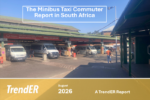
“Taxi Ranks: South Africa’s Largest Consumer Marketplace,” where you can explore how commuters engage with brands, retailers, informal traders and media during their journeys.
Taxi ranks are rarely thought of as marketplaces. They are commonly viewed as transport interchanges—places where commuters board taxis and continue their journeys. Yet beneath this functional purpose lies one of South Africa’s largest and most dynamic consumer ecosystems. Every day, millions of people converge at taxi ranks, creating an environment where mobility, commerce, culture and community intersect.
Unlike traditional shopping centres, consumers do not visit taxi ranks with the intention of shopping. However, while waiting for taxis, transferring between routes or standing in queues during peak hours, purchasing becomes part of the commuting experience. Some commuters grab breakfast before work, others buy lunch on the move, while many purchase groceries, household essentials or fresh produce on their way home. Informal traders, convenience retailers, financial services, mobile vendors and national brands all compete for the attention of consumers who pass through these spaces every day.
Peak-hour queues present a unique opportunity for brand engagement. Morning and afternoon rush hours create large captive audiences with extended dwell times, giving brands a rare opportunity to reach consumers when they are attentive, mobile and making everyday purchasing decisions. From outdoor advertising and branded activations to product sampling, mobile retail and digital engagement, taxi ranks offer an environment where marketing can become part of the commuter journey rather than interrupt it.
The movement within a taxi rank is orchestrated by taxi queue marshals—the unsung coordinators of the industry. Acting as traffic directors and information guides, they manage passenger flow, direct commuters to the correct routes and help maintain the rhythm of one of the world’s busiest informal transport systems. Their role ensures that, despite the constant movement of vehicles and people, the system operates with remarkable efficiency.
More importantly, taxi ranks are social connectors. They are the meeting point between townships, suburbs, cities and rural communities. They connect the formal economy with the informal economy, bringing together office workers, domestic workers, students, entrepreneurs, informal traders and shoppers within a shared public space. Few places in South Africa reflect the country’s diversity as vividly as a taxi rank.
Whether in the heart of Johannesburg, a suburban shopping precinct or a rural town, taxi ranks exist wherever people need to move. They are not simply transport hubs—they are economic engines, cultural crossroads and consumer marketplaces where millions of purchasing decisions, social interactions and brand impressions are made every single day. For businesses seeking to understand or influence the South African consumer, there are few environments that offer greater reach, frequency and authenticity than the taxi rank.